
Vetiver
The Root That Smells Like the Earth Itself
 Bourbon Vetiver
 Haitian Vetiver
 Java Vetiver
More Than Earth and Grass
The legendary perfumer Jean Kerleo, longtime curator of the Osmotheque - the world's largest perfume archive - was once asked what vetiver smells like. His answer: "Imagine a sack of potatoes." Sounds unremarkable. But that earthiness is only one of many facets.
Pure vetiver oil is surprisingly multifaceted. In the top notes, you find citrusy, almost grapefruit-like tones. The heart turns green and grassy, with a damp freshness like a forest floor after rain. The base delivers what vetiver is famous for: smoky, woody depth reminiscent of charred wood, aged leather, and dark soil.
The difference from synthetic alternatives is dramatic. Individual molecules like vetiverol or Iso E Super can mimic certain facets - the warm woodiness here, the earthiness there. But the full complexity of the natural oil with its 150-plus components cannot be reproduced. Vetiver belongs to the rare group of materials for which no synthetic substitute exists.
Three Origins, Three Characters
Not all vetiver smells the same. Depending on the region, the oil differs significantly:
Haitian vetiver is the freshest of the three: clean, light, with pronounced citrus and floral facets. A subtle pepperiness recalls black pepper. The majority of modern vetiver perfumes use Haitian oil. Roughly 50-60% of global production comes from Haiti, where about 30,000 farmers depend on the crop.
Bourbon vetiver from Reunion is the most complex and warmest: mineral, nutty, with caramel and liquorice nuances. Perfumers prize it for its depth and slightly rosy undertones. The first chemical analysis of vetiver oil was conducted in 1809 in France using roots from Reunion.
Javanese vetiver is the most intense: smoky, leathery, maximally earthy. Jean-Claude Ellena, the legendary Hermes perfumer, described an Indonesian vetiver oil like this:
"One recognises clearly defined, dense woody notes, sulphurous, matchstick notes and very interesting grapefruit zests."
- Jean-Claude Ellena, perfumer and longtime house perfumer of Hermes
A Grass With Hidden Treasures
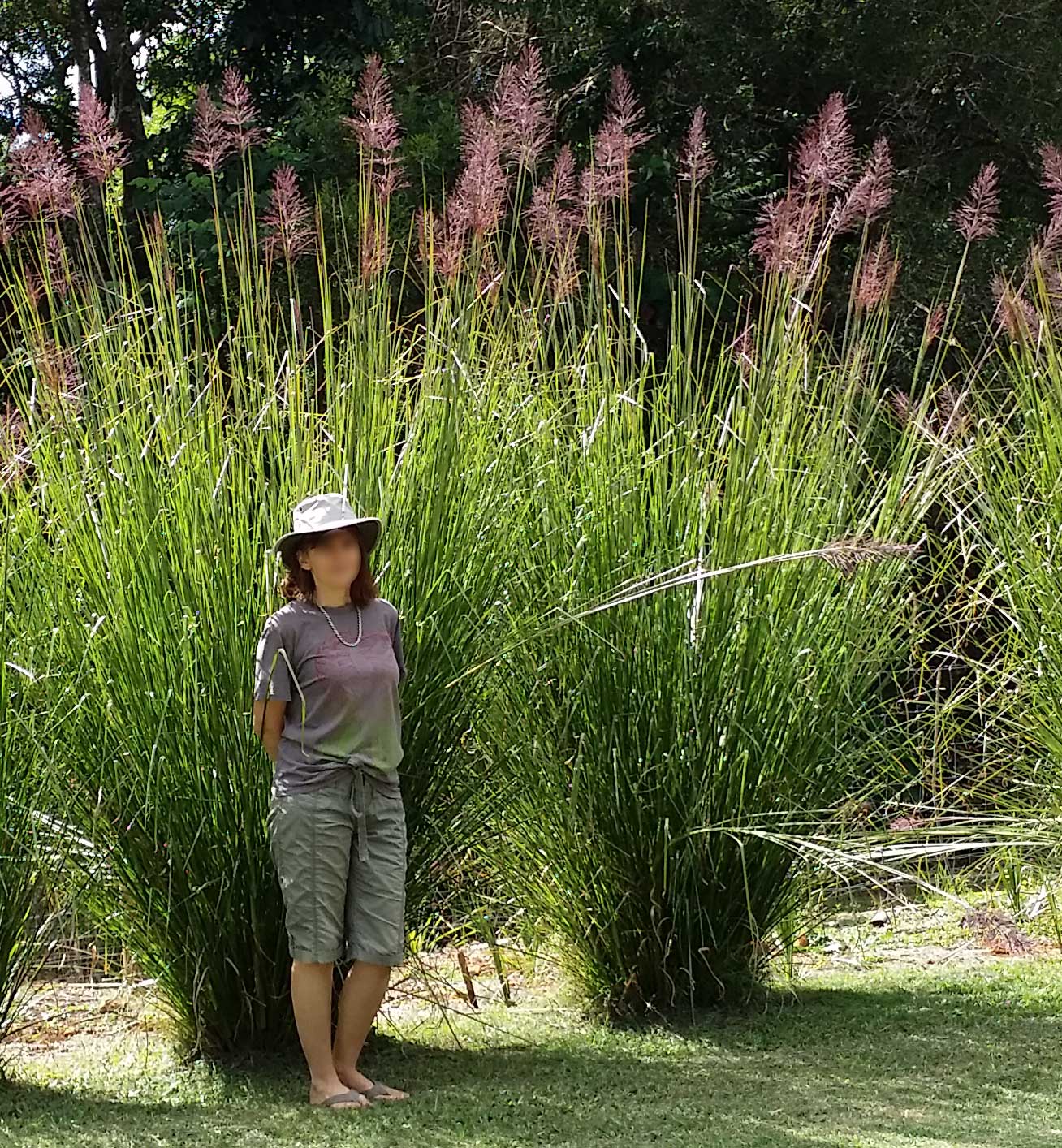
Vetiver (Chrysopogon zizanioides) is a tropical bunchgrass from the Poaceae family. The name comes from Tamil: vetiveru means "root that is dug up." Above ground, the plant looks unremarkable - a dense bush growing up to two meters tall. The magic lies beneath the surface.
Unlike most grasses, whose roots spread flat and horizontal, vetiver roots drill up to four meters straight down into the soil. A dense, interwoven network that makes the plant a natural erosion barrier. Around the world, vetiver is used for slope stabilization. The roots can even break down heavy metal contamination in soil.
The plant originates from India, where it is known as khus. Ayurvedic texts mention vetiver as early as the 10th century BCE. Traditionally, mats woven from the roots are hung in doorframes and kept moist. This cools the air while releasing a fresh scent - natural air conditioning, millennia before electricity was invented.
From India to Haiti
Vetiver entered European perfumery in the early 19th century, after roots were imported from the Indian Ocean. But for centuries it served mainly as a fixative - a material that makes other scents last longer while remaining in the background itself.
That changed abruptly in 1957. Carven Vetiver, created by perfumer Edouard Hache, was the first fragrance to feature vetiver as the protagonist. Two years later came Guerlain Vetiver (1959) by Jean-Paul Guerlain, which became the definitive vetiver reference - "the benchmark that is endlessly quoted and referenced," as Fragrantica puts it.
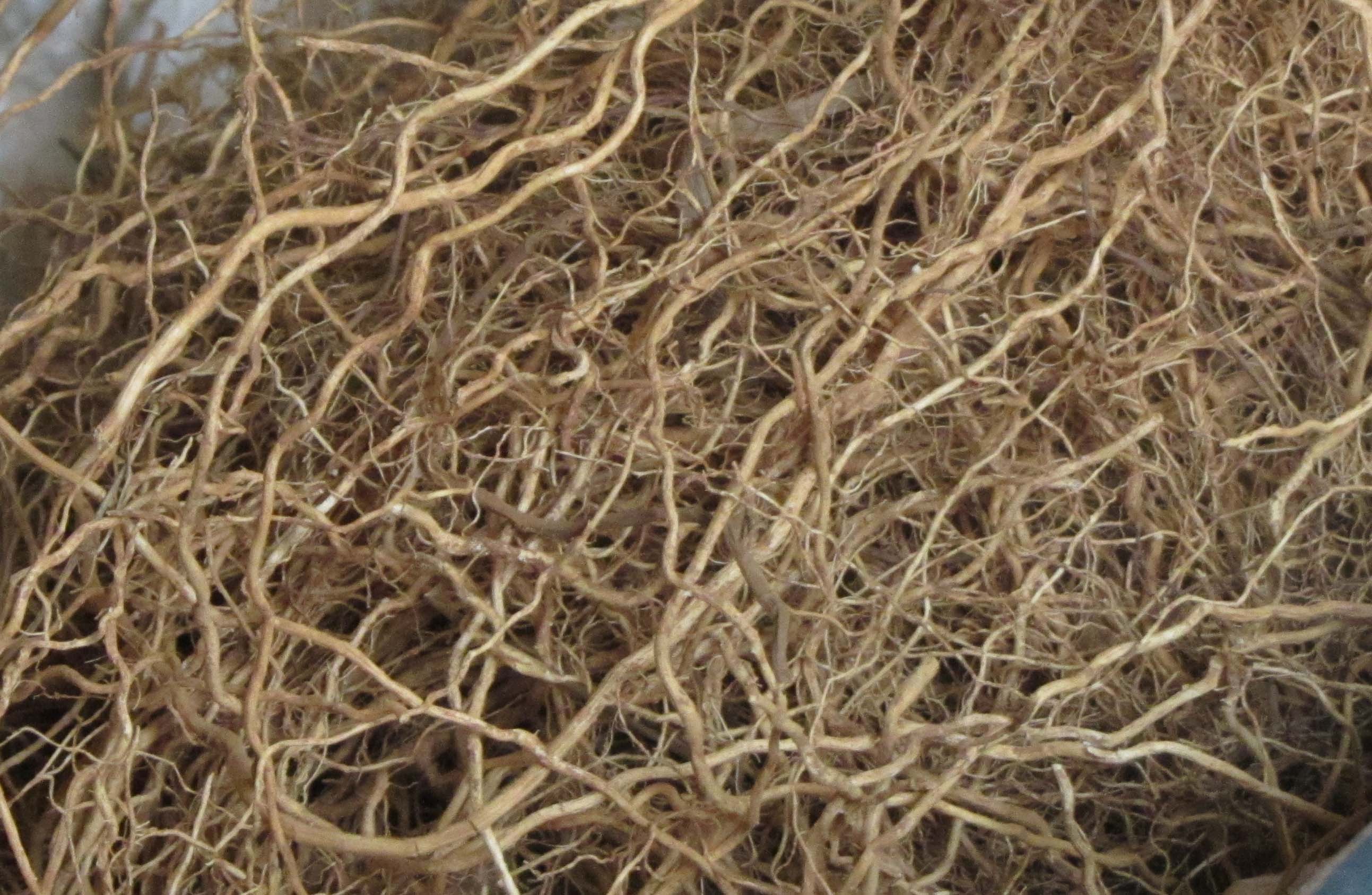
Today Haiti is by far the most important producer. In the country's southwest, vetiver is called the "super crop." For many families in the barren hill regions, it is the only source of income. Major fragrance houses like IFF and Givaudan run sustainability programmes on the ground. Vetiver is thus one of the few perfumery materials where the supply chain actively contributes to regional development.
150 Kilos for One Litre of Oil
Extracting vetiver oil is an exercise in patience. The roots must grow for 18 to 24 months before they are ready for harvest. Then they are dug up by hand, cleaned, dried, chopped, and processed by steam distillation. This takes up to 24 hours - unusually long even for natural oils.
The yield is modest: roughly 150 kilos of dried roots produce just one kilo of essential oil. The result is a dense, amber-coloured oil with an enormous range of scent molecules. The key players: khusimol (8-11% of the oil), the vetivones (alpha and beta), and vetiverol - together responsible for the characteristic earthy, woody scent.
Global annual production is estimated at 250 tonnes. Sounds like a lot, but it is modest for an ingredient that appears in 90% of all Western perfumes.
What Vetiver Does in a Perfume
Vetiver is primarily a base note but can also work in the heart of a composition. Its role goes far beyond "the earthy part."
Perfumers use vetiver as an anchor: it gives a fragrance grounding without making it heavy. A touch of vetiver can stabilize a fleeting citrus opening, add depth to a floral composition, or make a woody base more complex. It functions like a foundation on which other notes stand.
As a fixative, vetiver extends the longevity of other notes. Its large, heavy molecules evaporate slowly and keep lighter components on the skin longer.
In woody fragrances, vetiver often serves as the green counterpoint to dry cedarwood or creamy sandalwood. In fresh fragrances, it provides earthy depth beneath citrus and greens. And in oriental compositions, it forms an earthy foundation alongside patchouli and oud.
"A very simple formula - vetiver and musk. But there are different facets of vetiver. That was very difficult, because with a simple formula you need good quality and good proportions."
- Nathalie Lorson, perfumer, on creating Lalique Encre Noire
Five Faces of Vetiver
Vetiver can be anything - from green and fresh to dark and smoky. These five fragrances show its range:
What Pairs Well With Vetiver?
Vetiver is remarkably versatile - it forms convincing pairs with both fresh and warm notes:
Sandalwood smooths vetiver's rough edges and creates a creamy, meditative earthiness. An accord that smells like warm skin.
Bergamot forms the classic cologne accord with vetiver: sparkling freshness over earthy depth. Guerlain Vetiver lives on exactly this tension.
Rose and vetiver sounds like an unlikely pair, but it works beautifully. Rose brings elegance and sensuality, vetiver brings grounding.
Cedarwood doubles the woody side and creates a dry, almost architectural accord. Clean and structured.
Patchouli amplifies the earthy dimension into something hypnotic. Together, the two form the backbone of many oriental compositions.
Tonka bean softens vetiver's edges and rounds it with a powdery, sweet warmth.
Vanilla creates a fascinating contrast: creamy sweetness against smoky depth. A tension that can become addictive.
Frequently Asked Questions
What does vetiver smell like in perfume?
Vetiver smells earthy, woody, and smoky - with facets of grapefruit, wet forest floor, and dried grass. Depending on origin, the oil can be fresh and citrusy (Haiti), warm and balsamic (Bourbon), or intensely smoky (Java).
Is vetiver only for men's fragrances?
No. Vetiver has been marketed as masculine for decades, but the note itself is gender-neutral. Many of the best vetiver compositions are unisex, and vetiver appears as a base note in roughly 40% of women's perfumes as well.
Is there synthetic vetiver?
There are synthetic molecules like vetiverol or Iso E Super that mimic individual facets. But a full synthetic replacement for the complexity of the natural oil does not exist - vetiver is one of the few perfumery materials for which that is true.
Why is vetiver expensive?
The extraction process is demanding: roots must grow for 18-24 months, are harvested by hand, and steam distillation takes up to 24 hours. About 150 kilos of dried roots produce just one kilo of essential oil.
What is the difference between Haitian and Javanese vetiver?
Haitian vetiver is fresher, cleaner, with pronounced citrus and floral facets. Javanese vetiver is more intense, smokier, and more leathery. Bourbon vetiver from Reunion falls in between - warm, nutty, and complex.
Why is vetiver called 'the oil of tranquility'?
In Indian and Sri Lankan tradition, vetiver has been used for its calming properties for millennia. Mats woven from vetiver roots are hung in doorframes and moistened - a natural air conditioning and fragrance experience in one.
Is it true that vetiver appears in 90% of all perfumes?
Yes, as a base note or fixative, vetiver is present in the vast majority of Western perfumes - often in such small amounts that you do not consciously perceive it. It provides depth and longevity.

Nishane
Sultan Vetiver
Earthy Vetiver Majesty
Sample unavailable

Etat Libre D'Orange
Fat Electrician
Nutty Vetiver Static
Sample from €9


Une Nuit Nomade
Mr Vetiver
Fresh Spicy Vetiver
Sample from €9

D.S. & Durga
Cowboy Grass
Sagebrush plains & thyme breeze.
Sample from €9

Essential Parfums
Mon Vetiver
Fresh Vetiver & Lime
Sample from €9

Zoologist
Tiger
Smoky Vetiver & Ebony
Sample from €9

Ex Nihilo
Vetiver Moloko
Creamy Woody Vetiver
Sample from €9

Filippo Sorcinelli
Symphonie-Passion
Vetiver: Decay & Rebirth Symphony
Sample from €14

Parle Moi de Parfum
Woody Perfecto/107
Vetiver meets coffee & leather.
Sample from €9

Boadicea the Victorious
Lavish
Fresh Spicy Vetiver
Sample from €9

Imaginary Authors
The Soft Lawn
Green zest, tennis court freshness.
Sample unavailable

Boadicea the Victorious
Consort
Fresh Citrus & Woods
Sample from €9

Meo Fusciuni
Spirito
Spiritual Green Woods
Sample from €9

Toskovat
Pining Dew 2
Boozy pineapple & salty tears
Sample from €9

Atelier Materi
Ambre Papier
Spicy Amber Elegance
Sample from €9

Fabbrica Della Musa
Tribeca Vibes
Green, Floral, Mineral
Sample from €9


Parfums MDCI
Vétyver Messager
Fresh Gourmand Vetiver
Sample from €14

Jovoy
Incident Diplomatique
Smoky vetiver elegance for men.
Sample from €9

Nishane
Hacivat X
Bold citrus meets smoky vetiver.
Sample from €24

Ex Nihilo
The Hedonist Extrait
Intense woody freshness
Sample from €9

Etat Libre D'Orange
Frustration
Spicy-Sweet Nostalgia
Sample from €9

Thameen
Peacock Throne
A majestic floral throne
Sample from €9

Anfas
Haneen
Earthy woods meet green freshness.
Sample from €9

Meo Fusciuni
Last Season
Earthy Forest Chypre
Sample from €9

Notes de Bas de Paje
Prolégomènes
Cozy Woody Fig Elegance
Sample from €9


Essential Parfums
Bois Imperial
Modern Woody Freshness
Sample from €9

Parfums de Marly
Perseus
Radiant Citrus & Woods
Sample from €9

Thameen
Carved Oud
Smooth, Woody Oud Perfection
Sample from €9

Roberto Ugolini
Oxford
Citrus-spiced woody elegance
Sample from €9

Nishane
Karagoz
Bold grape, pineapple, woody oud
Sample from €9

Jovoy
Private Label
Smoky leather meets earthy vetiver.
Sample from €9

Liquides Imaginaires
Fortis
Earthy spices, smoky woods.
Sample from €9

Beaufort London
Fathom V
Earthy aquatic with green spice
Sample from €14