
Ambroxan
The Invisible Molecule That Rules Modern Perfumery
Warm, Mineral, and Somehow Invisible
Ambroxan is hard to describe because it doesn't smell like a typical fragrance ingredient. It doesn't have an obvious character like rose or vanilla. Instead, it creates an effect.
Dry warmth is the most common association. Like a piece of driftwood that's been sitting in the sun all day. Plus something mineral, almost salty, reminiscent of ocean breeze. Many describe it as "clean skin" or "freshly pressed linen."
What makes it special: Ambroxan activates not just olfactory receptors, but also the pheromone receptor VN1R1. It interacts with our brain on a level below conscious perception. Whether that's why Ambroxan-heavy fragrances are so often called "compliment magnets" remains debated. But perfumers have been exploiting this effect for decades.
Ambroxan, Ambrox, Cetalox - What's What?
The name "Ambroxan" is actually a trademark of Firmenich, one of the world's largest fragrance and flavor companies. The chemical term is ambroxide (also ambrox). But like Band-Aid for adhesive bandages, the brand name has become the generic term.
The key variants:
Ambroxan (Firmenich) is the enantiopure form - a single, highly purified molecular version. It smells dry, woody, and mineral with a clear, almost crystalline character.
Cetalox (also Firmenich, since 1993) is the racemic mixture - containing both mirror-image forms of the molecule. The result smells creamier, softer, more like skin musk. Many niche perfumers prefer Cetalox for its warmer, less "technical" character.
Ambrox Super and Ambrostar are trade names from other manufacturers for similar molecules. At their core, it's always the same basic scaffold: a terpenoid with the molecular formula C₁₆H₂₈O.
From Sperm Whales to Clary Sage
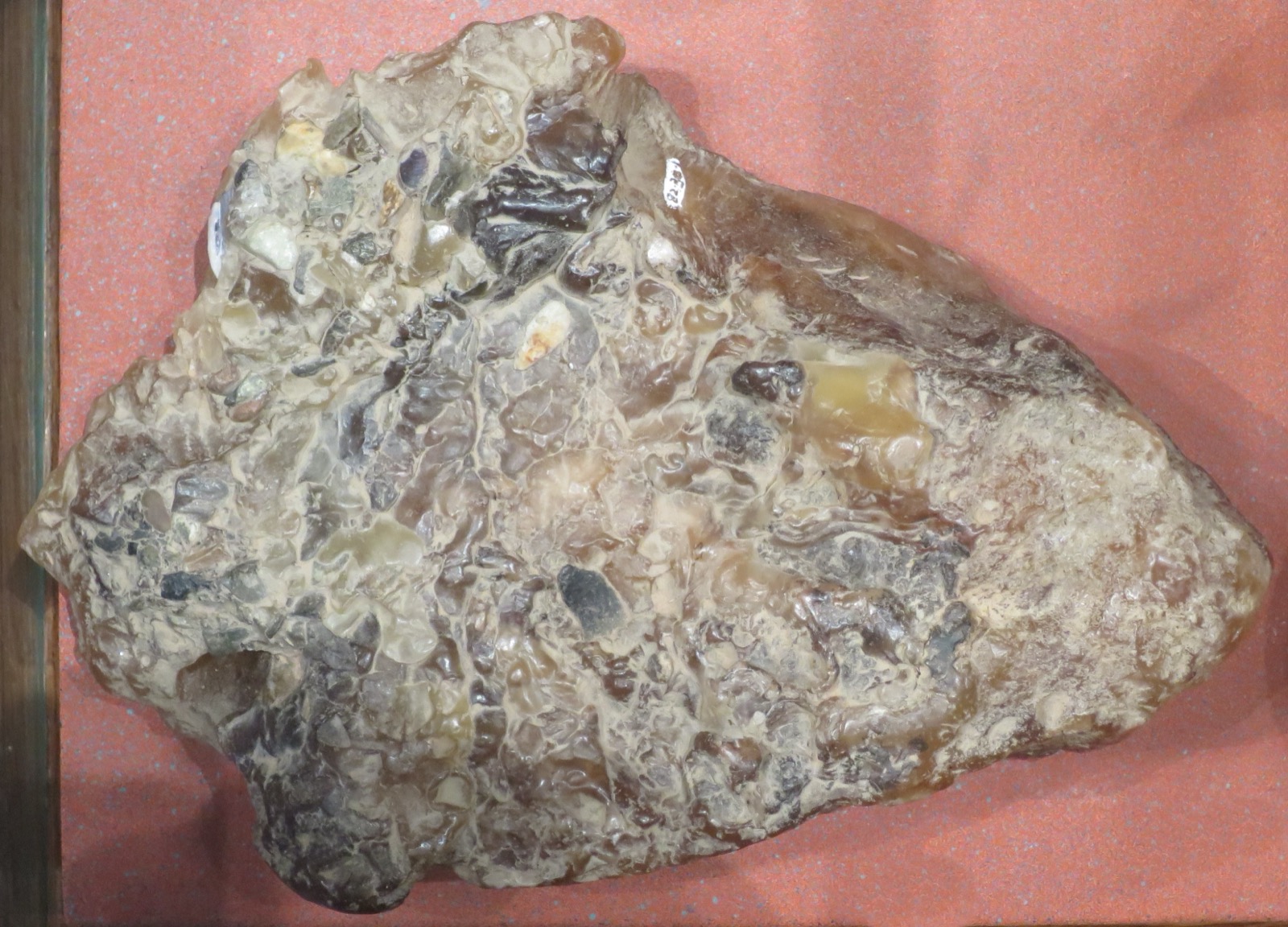
The story of Ambroxan begins with ambergris - one of the most mysterious substances in perfumery. Ambergris forms in the digestive tract of sperm whales, likely as a response to the indigestible beaks of squid. The whale expels the substance, it floats on the ocean for months or years, and under the influence of sun, saltwater, and air, it transforms from a dark, unpleasant-smelling mass into a waxy, silver-grey material with an intoxicating, warm scent.
The ancient Egyptians already knew ambergris. The Arabs called it anbar. In medieval Europe, it was more valuable than gold. Louis XV had his chambers perfumed with it. Ambergris served as a spice, a medicine, and of course a fragrance ingredient.
The problem: availability was completely unpredictable. You couldn't "produce" ambergris - you had to wait for a piece to wash up on a beach by chance. And as sperm whale populations declined through industrial whaling, natural ambergris became ever rarer and more expensive. Today it commands over 40,000 euros per kilogram.
The Hunt for Synthetic Ambergris
In the 1930s, the search for a synthetic replacement began. At Firmenich in Geneva, Croatian-Swiss Nobel laureate Leopold Ruzicka and M. Stoll led the research. They analyzed natural ambergris and identified ambroxide as one of the key compounds responsible for its characteristic scent.
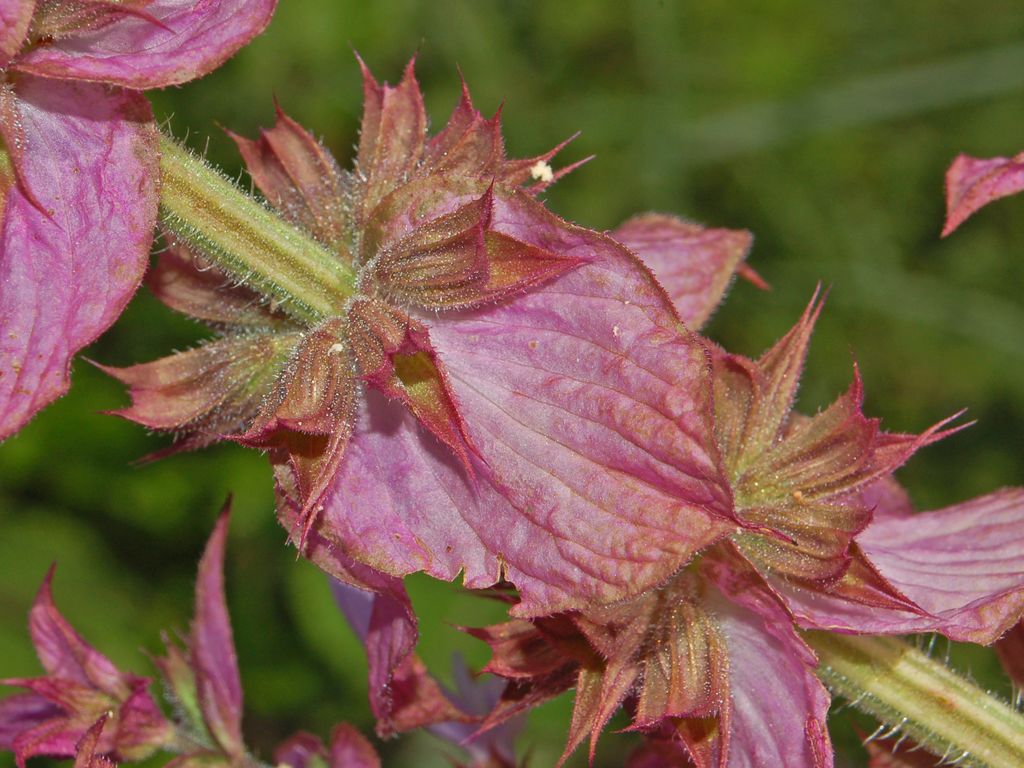
In 1950, Firmenich filed the crucial patent: the synthesis of ambroxide from sclareolide, a substance derived from sclareol. And sclareol? It's found in abundance in clary sage (Salvia sclarea), an unassuming plant from the Mediterranean region.
The breakthrough was complete only in 1977, when chromatographic studies by IFF chemists demonstrated that ambroxide is actually the substance that gives ambergris its characteristic smell. Not a mixture of many compounds, but this single molecule was the key.
How a Sage Becomes Luxury
The industrial production of Ambroxan is a multi-step chemical process:
- Harvest: Clary sage is cultivated primarily in southern France, Russia, and Eastern Europe, harvested after flowering.
- Extraction: Sclareol is isolated from the plant material - a diterpene alcohol that makes up about 1-2% of the essential oil.
- Oxidation: Sclareol is oxidized to sclareolide (a lactone compound).
- Hydrogenation: Sclareolide is hydrogenated to a diol.
- Dehydration: In the final step, water elimination yields the finished Ambroxan.
The cost sits around 350-590 euros per kilogram. Compared to natural ambergris (over 40,000 euros/kg), that's a fraction. But compared to many other synthetics, Ambroxan is quite expensive, which explains why particularly Ambroxan-heavy fragrances often sit in the premium price segment.
Since 2010, there's also a biotechnological route: Givaudan developed a process where yeast cells ferment sclareol directly from sugar. This "green chemistry" makes production even more sustainable and independent of agricultural land.
The Fabric of Modern Fragrance
"Ambroxan is mesmerizing because it encapsulates so many contrasting facets within a single molecule. It's mineral and crisp - almost effervescent - yet also warm, animalic, and deeply alluring. Above all, its radiance is unmatched: a strong yet sophisticated sillage that elevates every fragrance it touches, making it feel instantly more modern."
- Geza Schoen, perfumer and founder of Escentric Molecules
Ambroxan is a base note that evaporates slowly, lending a fragrance longevity and depth. But its role goes far beyond that of a simple fixative.
As a "skin scent" generator, Ambroxan creates the impression that a perfume wasn't sprayed on but emerges directly from the skin. It makes a fragrance more intimate, more personal. In an era where "the scent you only smell when someone hugs you" is the ideal, that's invaluable.
As an amplifier, Ambroxan boosts the sillage - the scent trail - of other notes without becoming dominant itself. Perfumers speak of a "diffusion effect": it projects the fragrance further into space without making it louder.
As a bridge, it connects fresh top notes with heavy base notes. A citrus opening can transition seamlessly into a sandalwood base through Ambroxan, without the shift feeling abrupt.
The most famous Ambroxan deployment: Dior Sauvage. Perfumer Francois Demachy used an unusually high dose of the molecule. The result became the best-selling men's fragrance in the world. Equally influential: Molecule 02 by Escentric Molecules, which put Ambroxan on stage as a soloist - nothing but the pure molecule. An experiment that became a cult classic.
Five Facets of Ambroxan
Ambroxan can be many things - invisible foundation, prominent lead, or subtle softener. These five fragrances showcase its range:
What Pairs Well With Ambroxan?
Ambroxan is an exceptionally versatile molecule that works with almost anything:
Musk and Ambroxan together create the ultimate skin scent. Both notes merge with the skin, producing that "Is that your perfume or do you just smell this good?" effect.
Cedarwood gives Ambroxan structure and edge. This combination forms the backbone of countless modern men's fragrances, from Dior Sauvage to Bleu de Chanel.
Iris forms a powdery-mineral alliance with Ambroxan that's extremely popular in contemporary niche perfumery. Cool, elegant, genderless.
Pink pepper brings out Ambroxan's fresh, almost effervescent side. A lively, modern contrast.
Vanilla rounds off Ambroxan's cooler facets, creating a creamy warmth that works particularly well in oriental compositions.
Vetiver complements Ambroxan's mineral, earthy character perfectly. Together they create an accord that smells of damp earth and warm stone.
Frequently Asked Questions
What does Ambroxan smell like?
Ambroxan smells warm, woody, and slightly mineral - often described as 'warm skin' or 'clean laundry.' Perception varies significantly from person to person, as not everyone has the same olfactory receptors for it.
Is Ambroxan natural or synthetic?
Ambroxan is a synthetic molecule that also occurs naturally in ambergris (whale secretion). Today it's industrially produced from sclareol, a compound found in clary sage.
Is Ambroxan the same as ambergris?
No. Ambergris is the natural secretion from sperm whales containing over 200 different compounds. Ambroxan is one of those molecules - specifically the one primarily responsible for ambergris's characteristic scent.
What's the difference between Ambroxan and Cetalox?
Both are based on the same core molecule (ambroxide), but Ambroxan is enantiopure while Cetalox is racemic. In practice, Ambroxan smells drier and woodier, while Cetalox is creamier and more musky.
Why can't everyone smell Ambroxan?
Perception of Ambroxan depends on a specific olfactory receptor (OR11H7). People with a certain variant of this receptor perceive Ambroxan weakly or not at all - estimated to affect 20-25% of the population.
Is Ambroxan vegan and cruelty-free?
Yes. Modern Ambroxan is entirely synthesized from plant-based sources (clary sage). It has no connection to sperm whales or ambergris.

Essential Parfums
Bois Imperial
Modern Woody Freshness
Sample from €9

Parfums D'Elmar
Amalaya
Creamy Floral Dream
Sample from €9

Initio
Power Self
Woody Floral Musk
Sample from €9

Etat Libre D'Orange
Exit the King
Modern Soapy Chypre
Sample from €9

Maison Crivelli
Lys Solaberg
Smoky Lily & Quince
Sample from €9

Borntostandout
Dirty Heaven
Creamy vanilla & saffron
Sample from €9

Atelier Materi
Bois d'Ambrette
Woody Ambrette Musk
Sample from €9

Pana Dora
Majestic Amber
Regal library of amber-leather
Sample from €9

Mystikum
Forbidden Rouge
Forbidden Cherry & Spice
Sample from €9

Adamo
Juanillo
Creamy citrus & tropical sweetness.
Sample from €9

Experimental Perfume Club
Cardamom Moss
Spicy and mineral moss.
Sample from €9

Parfums de Marly
Valaya
Clean Peach Musk
Sample from €9

Parfums D'Elmar
Kaya
Creamy Fruit & Rum Gourmand
Sample unavailable

Etat Libre D'Orange
The Ghost in the Shell
Cyborg skin scent
Sample from €9

D.S. & Durga
I Don't Know What
Fresh woods, modern allure.
Sample unavailable

Ex Nihilo
Blue Talisman Extrait
Juicy Pear & Smooth Woods
Sample from €9

Essential Parfums
Ambre Latte
Creamy Amber Gourmand
Sample unavailable

Borntostandout
Oud Candy
Dark wood meets burnt sugar.
Sample from €14

Atelier des Ors
Nuda Veritas
Clean Floral Aquatic
Sample from €9

Son Venin
Ambr Super
Modern Amber Woody
Sample from €9

Sora Dora
7
Bold synth-spicy modern elixir.
Sample from €9

Ex Nihilo
Blue Talisman
Modern fruity-woody talisman.
Sample from €9

Liquides Imaginaires
Liquide Gold
Solar-kissed saffron & vanilla
Sample from €9

Widian
Ginger
Zesty Ginger & Citrus
Sample from €9


Room 1015
Sonic Flower
Powdery Floral Musk
Sample from €9

Strangelove
meltmyheart
Creamy chocolate & rare orris.
Sample from €14

Borntostandout
Purple Stain
Intense Spicy Oud & Fruits
Sample unavailable

Hellenist
Les Dieux aux Bains
Divine Aquatic Freshness
Sample from €9

Les Eaux Primordiales
Vanille
Spicy Vanilla Mystery
Sample from €9

Liquides Imaginaires
Fleur de Sable
Windswept desert rose and spice.
Sample from €9

Ulrich Lang New York
17 Nandan Road
Citrus-osmanthus garden freshness.
Sample from €9

Pana Dora
Dux Orientis
Oriental aquatic with animalic depth
Sample from €9

Hellenist
La Nuit des 300
Sensual Aromatic Musk
Sample from €9

Oman Luxury
Nasaj
Fruity-Floral Leather
Sample from €9

Mystikum
The Color of Air
Airy woody freshness.
Sample from €9